
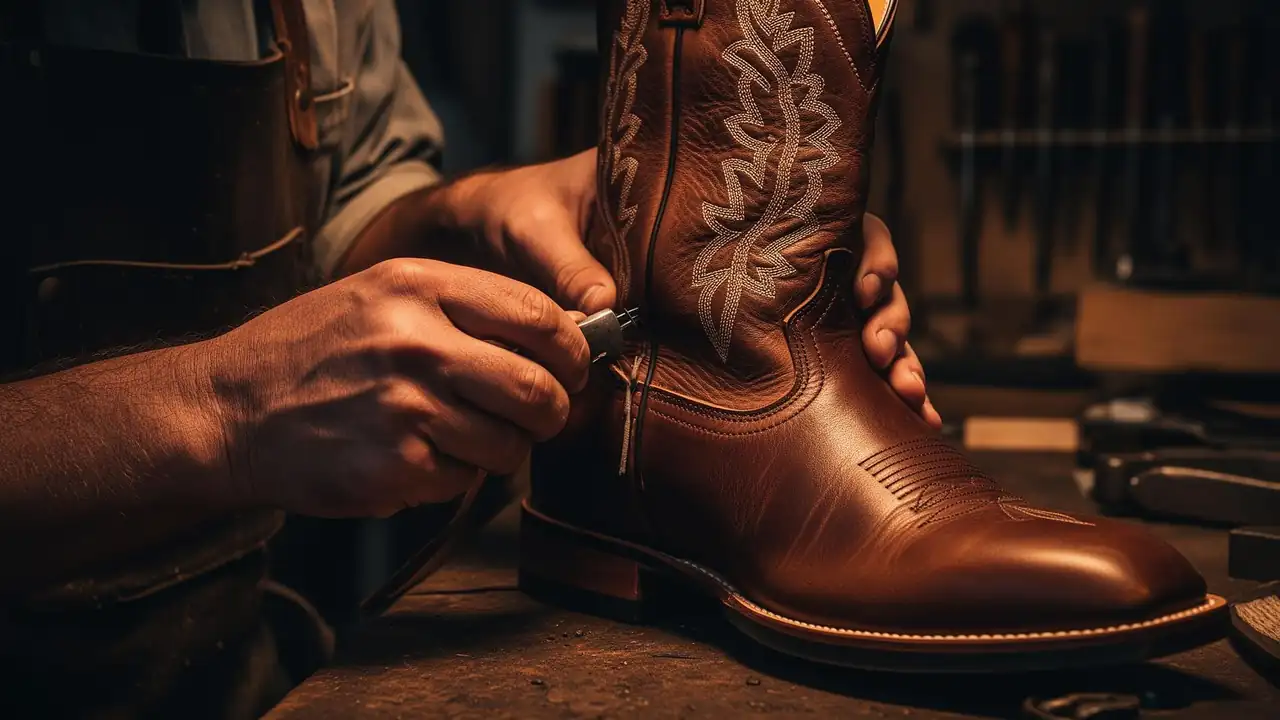
When a brand plans a boot collection, one of the first technical choices is construction: how the outsole is attached to the upper. The two methods brands most often compare are Goodyear welt and cemented construction. Both can produce a good-looking boot. They differ in how the boot is built, whether it can be resoled, and the story a brand can tell about it. This guide explains those differences in plain terms so you can make the right choice for your customers.
What is Goodyear welt construction?
In a Goodyear welt boot, a strip of material called the welt is stitched to the upper and the insole. The outsole is then stitched to that welt. The sole attachment is mechanical: thread holds the layers together rather than adhesive alone. Building a boot this way takes more steps and specialized welting and sole-stitching machinery, guided by skilled operators. At OAK, every boot in our three lines, western boots, western work boots and chelsea boots, uses Goodyear welt construction. You can see the details on our Goodyear welt construction page.
What is cemented construction?
In a cemented boot, the outsole is bonded directly to the upper with adhesive and pressure. There is no welt and no sole stitch holding the parts together. The process has fewer steps and relies mainly on adhesive bonding and press equipment. Cemented construction is widely used across footwear.
The key differences
Sole attachment
Goodyear welt: the outsole is stitched to a welt. Cemented: the outsole is bonded to the upper with adhesive. This is the core difference, and the others follow from it.
Repairability
Because the outsole of a Goodyear welt boot is stitched to the welt, a qualified repair specialist can remove the worn sole and stitch on a new one. The upper, which is often the part customers value most, can return to service. With cemented boots, resoling is often limited or impractical, so a worn sole usually means the end of the boot.
Assembly
A Goodyear welt boot has more assembly steps: the welt is stitched to the upper and insole, then the outsole is stitched to the welt. A cemented boot has fewer steps, with the outsole attached using adhesive and pressure.
Craftsmanship and equipment
Goodyear welting calls for specialized machinery and operators with the skill to run it. Cemented construction mainly uses adhesive bonding and press equipment. For a brand, this is part of what you are buying when you choose a Goodyear welt manufacturer: a factory set up, and staffed, for this specific method.
What construction does not decide on its own
It is tempting to make broad claims about weight, comfort or how long a boot will last based on construction alone. Be careful: weight, flexibility, comfort and service life depend on the materials, lasts and design of each boot, not on construction alone. A well-designed boot of either type can be comfortable; a poorly chosen leather or last can undermine any construction. When you describe your boots to customers, focus on facts you can stand behind, such as how the sole is attached and that the boot can be resoled.
Why many premium brands choose Goodyear welt
- A clear product story. "Stitched sole, made to be resoled" is simple to explain on a product page, a hang tag or in a store.
- Customer value over time. Customers who invest in a quality pair can repair it rather than replace it, which supports a premium position.
- Fit with western boot tradition. Buyers of quality western boots often look for welted construction, so it aligns with the expectations of the category.
- One construction across lines. If you sell western boots, work-ready boots and chelsea boots, a shared construction gives your whole range a consistent standard.
When cemented construction may fit
Cemented construction can make sense for styles where resoling is not part of the product promise, or where a brand prioritizes a design that suits bonding. Some brands carry both types in different collections. The important thing is to choose deliberately and describe each product accurately, rather than letting the construction be an afterthought.
Questions to ask a manufacturer about construction
- Which construction methods do you specialize in, and which do you use for the styles I am considering?
- Do you do the welting and sole stitching in your own factory?
- Can the outsoles on my boots be replaced by a repair specialist?
- Which lasts and platforms are available in this construction, and what requires special development?
- How will materials and design affect the weight and feel of the finished boot?
For a broader view of what to evaluate in a factory, read how to choose a boot manufacturer.
How to explain construction to your customers
Keep the language concrete. Good examples: "Goodyear welt construction: the outsole is stitched to a welt, so the boot can be resoled by a qualified repair specialist." Or: "Handcrafted in León, Mexico, with a stitched Goodyear welt sole." Avoid promising a specific lifespan or weight that depends on materials and use. Honest, specific claims build trust with retailers and end customers alike.
Building Goodyear welt boots with OAK
OAK Footwear manufactures Goodyear welt boots under your label in León, Guanajuato, Mexico's leading center for leather goods and western boots. You can build on OAK platforms or develop a new design through special development, for private label western boots, western work boots or chelsea boots. If you are just getting started, our guide on how to start a private label boot brand covers the full path from brief to delivery. When you are ready, request a quote with the form below.